High Volume Eating for Fat Loss: A Practical Guide
High Volume Eating for Fat Loss: A Practical Guide
High volume eating is not a trick. It is arithmetic: foods differ a lot in how many calories they pack into each gram, and you can choose the low-calorie-per-gram ones to keep a plate big while you stay inside a target. Here is how to do it with real numbers.
The idea in one number: calories per 100 g
Using the raw ingredient weights in the Leanbox catalogue:
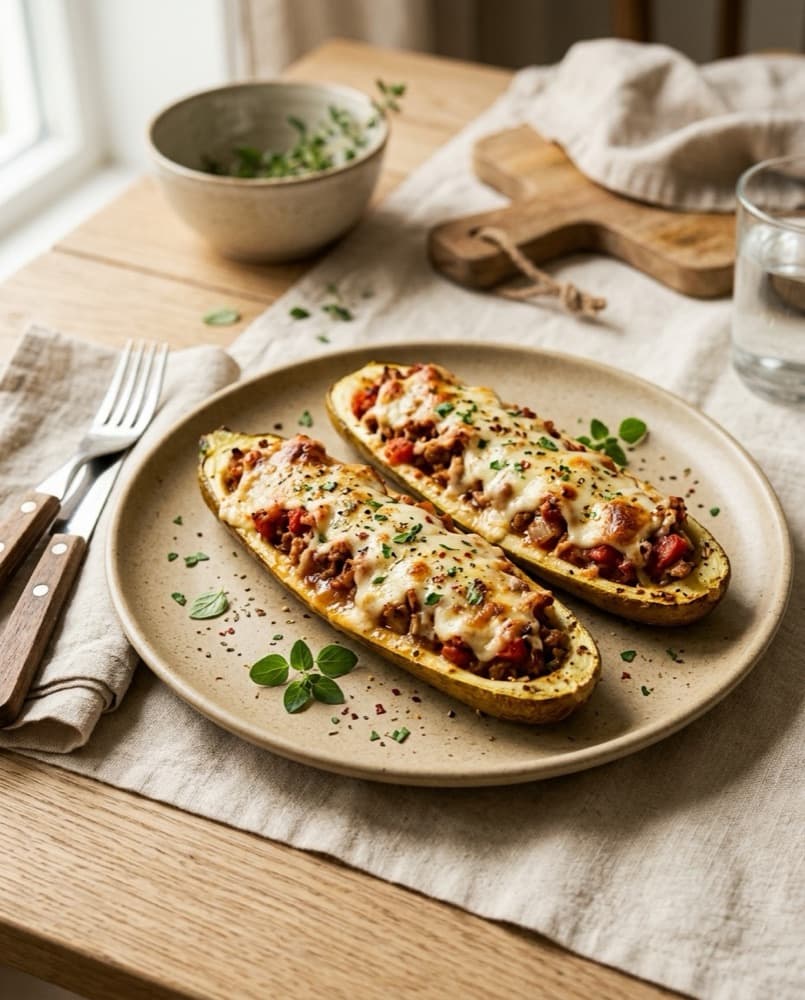
- Pizza-style turkey zucchini boats: 337 kcal from about 593 g of ingredients, which is roughly 57 kcal per 100 g.
- Cocoa peanut protein bites: 281 kcal from about 98 g of ingredients, which is roughly 287 kcal per 100 g.
Around 300 kcal can be a small handful or more than half a kilo of food. The bites are a fine snack, and the comparison is not a verdict on them, only a way to see the effect of energy density. One caveat: these are raw weights, and starches such as rice and pasta absorb water when cooked, so the gap on the plate is a little smaller than the raw numbers suggest.
Four levers that make a plate bigger
- Make vegetables the base. Zucchini, broccoli, cabbage, mushrooms and spinach add weight and crunch for very few calories.
- Pick lean, high protein ingredients. Turkey breast, egg whites, white fish, tuna and skyr make 30 g or more of protein per meal easy without much fat, and protein tends to be the most filling macronutrient.
- Use frozen fruit. Frozen berries and skyr turn into a soft-serve texture, a dessert that is large for what it costs in calories.
- Measure the dense extras. Oil, granola, cheese and sauces are the small items that carry the most calories per gram. Weigh them instead of pouring.
Five high volume plates from the catalogue
- Pizza-style turkey zucchini boats: 337 kcal, 45 g protein, €3.08, 25 minutes. Built on 300 g of zucchini.
- Sriracha turkey and broccoli stir-fry: 309 kcal, 52 g protein, €2.95, 15 minutes. 180 g of broccoli and 70 g of carrot with 190 g of turkey breast.
- Big zucchini feta frittata: 375 kcal, 44 g protein, €2.82, 18 minutes. About 290 g of eggs and egg whites, plus zucchini, tomato and spinach.
- Oat-crusted turkey escalope and slaw: 409 kcal, 58 g protein, €2.83, 18 minutes. A crispy escalope with 120 g of red cabbage slaw.
- Berry soft-serve swirl: 249 kcal, 34 g protein, €2.30, 5 minutes. 150 g of frozen berries and 150 g of skyr.
Putting three together
Stir-fry, frittata and soft-serve in one day:
- Calories: 309 + 375 + 249 = 933 kcal
- Protein: 52 + 44 + 34 = 130 g
- Cost: €2.95 + €2.82 + €2.30 = €8.07
That is a lot of food for 933 kcal, and it leaves the rest of your target for breakfast and a starch-based meal. If you want more sweet options in the same spirit, see high protein desserts under 300 calories.
When high volume does not help
- Fibre needs a ramp-up. If you suddenly eat a lot more vegetables, you may feel bloated. Increase gradually and drink water.
- Volume is not a licence to under-eat. A big plate of zucchini with too little energy overall is not a plan. Very low intakes should only be set with a doctor or registered dietitian, especially if you are pregnant, have a medical condition or a history of eating disorders.
- Satiety is personal. Some people feel full on volume, others need more fat or starch. Treat this as an experiment, not a promise.
Using it in the app
In Leanbox, you can stack the calorie-max filter with a protein minimum and a time limit, which surfaces plates like the ones above in a couple of taps. If a recipe is a little too big or too small for your day, the portion slider rescales every ingredient in grams.
FAQ
What is high volume eating?
It is a way of building meals around foods that contain little energy for their weight, mainly vegetables, fruit, lean protein and low-fat dairy. The aim is a large, filling plate that still fits a calorie target.
Does high volume eating help with fat loss?
It can make a calorie deficit easier to stick to, because meals stay big and satisfying. Fat loss itself still depends on your total intake over time, and fullness varies from person to person.
What are the best high volume foods on a cut?
Zucchini, broccoli, cabbage, mushrooms and spinach for vegetables, plus lean proteins such as turkey breast, egg whites, white fish and skyr. Frozen berries and skyr make a large dessert for around 250 kcal.
Can high volume meals still have 40 g of protein?
Yes. The sriracha turkey and broccoli stir-fry has 52 g of protein for 309 kcal, and the pizza-style turkey zucchini boats have 45 g for 337 kcal.